Fenbendazole Panacur is one of the most widely used veterinary dewormers for treating intestinal parasites in animals. Veterinarians often recommend it because it effectively treats multiple types of intestinal worms and is considered safe when used as directed.
Whether you own a dog, cat, horse, rabbit, goat, or livestock, understanding the correct Panacur dosage by weight is essential for successful treatment. This guide explains how Panacur Fenbendazole works, recommended dosage charts, treatment schedules, safety information, and frequently asked questions.
What Is Fenbendazole Panacur?
Panacur contains fenbendazole, a broad-spectrum dewormer that treats a wide range of parasites. Fenbendazole Panacur treats intestinal parasites in many animal species. It is effective against roundworms, hookworms, whipworms, certain species of tapeworms, lungworms (in some animals), and Giardia when recommended by a veterinarian.
Fenbendazole Panacur works by blocking parasites from absorbing glucose, causing them to lose energy and die. As a result, the parasites die and are naturally expelled from the animal’s digestive system, helping restore overall health and prevent further infestations. A fenbendazole for cats dosage chart helps pet owners determine the correct weight-based dose, but treatment should always follow veterinary guidance.
Common Animals Treated with Panacur
Fenbendazole is commonly used for:
- Dogs
- Puppies
- Cats
- Horses
- Rabbits
- Goats
- Sheep
- Cattle
Follow the dosing schedule recommended for your animal. Is Panacur fenbendazole? Yes, Panacur is a brand name, while fenbendazole is the active ingredient that helps eliminate internal parasites.
Fenbendazole Panacur Dosage Chart by Weight
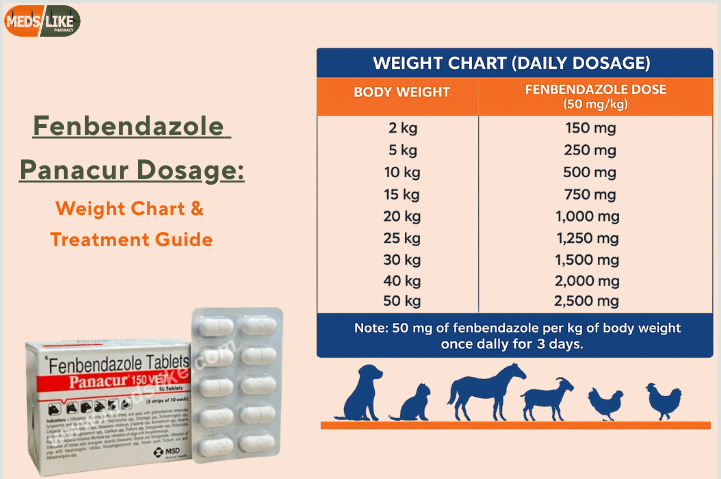
The standard veterinary dosage for most animals is:
50 mg of fenbendazole per kilogram (kg) of body weight once daily for 3 consecutive days.
Safe Weight Chart
| Body Weight |
Daily Fenbendazole Dose |
| 2 kg |
100 mg |
| 5 kg |
250 mg |
| 10 kg |
500 mg |
| 15 kg |
750 mg |
| 20 kg |
1,000 mg |
| 25 kg |
1,250 mg |
| 30 kg |
1,500 mg |
| 40 kg |
2,000 mg |
| 50 kg |
2,500 mg |
Important: Always verify the concentration of your Panacur product before measuring the dose, as oral suspensions, granules, and pastes contain different strengths. Panacur fenbendazole for dogs is commonly used to treat roundworms, hookworms, whipworms, and certain tapeworm infections when administered at the correct dosage.
Panacur Dosage for Dogs
Dogs are among the most common patients treated with Panacur. It is effective against:
- Roundworms
- Hookworms
- Whipworms
- Certain tapeworms
- Giardia (with veterinary guidance)
Standard Dog Dosage
- 50 mg/kg once daily
- Continue treatment for 3 consecutive days
- Some infections may require 5 days or longer, depending on your veterinarian’s recommendation.
Administer the medication with food whenever possible for easier dosing. Panacur fenbendazole for cats may be prescribed by veterinarians to treat intestinal worms and Giardia, with the dosage based on the cat’s body weight.
Panacur Dosage for Puppies
Puppies are particularly vulnerable to intestinal parasites. Veterinarians often recommend:
- Treatment beginning at 2 weeks of age
- Repeated deworming every few weeks during early growth
- Weight-based dosing at 50 mg/kg
Because puppies gain weight rapidly, always weigh them before each treatment. Fenbendazole for horses is widely used to control strongyles, pinworms, and ascarids, making it an important part of routine equine parasite management.
Panacur Dosage for Cats
Fenbendazole is sometimes prescribed for cats, although dosing schedules may vary. It may be used for:
- Roundworms
- Hookworms
- Giardia
- Lungworms (certain cases)
Never give medication intended for another species unless instructed by your veterinarian.
Panacur Dosage for Horses
In horses, Panacur is commonly used to control:
- Large strongyles
- Small strongyles
- Pinworms
- Ascarids
Horse dosing depends on:
- Body weight
- Paste concentration
- Parasite type
- Veterinary treatment plan
Weigh your animal accurately before each dose.
How to Give Fenbendazole Panacur
To achieve the best results with Fenbendazole Panacur, always administer the medication according to your veterinarian’s instructions. Begin by weighing your animal accurately, as the correct Fenbendazole Panacur dosage depends on body weight.
Next, calculate the appropriate dose based on the product’s strength. If you are using a liquid formulation, shake the bottle thoroughly before measuring the medication. Use the supplied syringe, dosing cup, or measuring device to ensure accurate dosing.
Whenever recommended, give Panacur with food to make administration easier and help reduce the chance of stomach upset. Finally, complete the full treatment course, even if your pet appears healthy before the medication is finished, as stopping treatment early may reduce effectiveness and allow parasites to survive.
Treatment Duration
Most intestinal worm infections require:
- Once daily
- 3 consecutive days
Certain parasites may require longer treatment:
| Parasite |
Typical Treatment Duration |
| Roundworms |
3 days |
| Hookworms |
3 days |
| Whipworms |
3–5 days |
| Giardia |
5 days (veterinary guidance) |
| Lungworms |
May require extended treatment |
Always follow your veterinarian’s instructions.
Benefits of Fenbendazole Panacur
Panacur remains one of the most trusted veterinary dewormers because it offers several advantages:
- Broad-spectrum parasite control
- Well-established safety profile
- Suitable for many animal species
- Available as liquid, paste, and granules
- Easy oral administration
- Low incidence of side effects
- Widely recommended by veterinarians
Possible Side Effects
Most animals tolerate Fenbendazole very well. Occasionally, mild side effects may occur:
- Temporary diarrhea
- Vomiting
- Reduced appetite
- Mild lethargy
- Soft stools
These side effects are usually mild, temporary, and resolve on their own. Call your veterinarian immediately if your pet develops:
- Severe vomiting
- Difficulty breathing
- Facial swelling
- Collapse
- Persistent diarrhea
Can You Give Too Much Fenbendazole?
Fenbendazole has a relatively wide safety margin. However, excessive doses can cause digestive upset, so always follow the recommended dosage. If an accidental overdose occurs, contact your veterinarian immediately for advice. Fenbendazole for chickens is often used under veterinary advice to help control certain intestinal worms and maintain the health of backyard and commercial flocks.
Precautions Before Using Panacur
Before administering Fenbendazole:
- Confirm your animal’s current weight.
- Use the correct formulation.
- Never exceed the recommended dosage.
- Store the medication according to label instructions.
- Tell your veterinarian about all medications your pet is taking.
- Consult a veterinarian before treating pregnant or nursing animals.
Storage Instructions
For best results:
- Store at room temperature.
- Protect from direct sunlight.
- Keep the container tightly closed.
- Do not freeze liquid formulations unless specified.
- Keep away from children and pets.
Final Thoughts
Fenbendazole Panacur is one of the most reliable veterinary deworming medications available. Its broad-spectrum activity, proven safety record, and effectiveness against common intestinal parasites make it a trusted choice for veterinarians and animal owners alike.
For the best results, always weigh your animal accurately, follow the recommended weight-based dosage, complete the full treatment course, and consult your veterinarian if symptoms persist or if you are unsure about the correct dosing schedule. Proper administration helps ensure effective parasite control while supporting your animal’s long-term health and well-being.
FAQ
Q: Is Panacur the same as Fenbendazole?
Yes. Panacur is a brand name, while fenbendazole is the active ingredient.
Q: How often should Panacur be given?
Give one dose daily for 3 days, depending on the parasite.
Q: Can Fenbendazole be given with food?
Yes. Many veterinarians recommend administering it with food to improve acceptance and reduce stomach irritation.
Q: Is Panacur safe for puppies?
Yes. Veterinarians consider fenbendazole safe for puppies when owners use it according to veterinary guidance.
Q: Can Panacur treat Giardia?
Yes. Veterinarians may prescribe fenbendazole as part of a Giardia treatment plan, along with proper hygiene practices and supportive care.
References:
 +1 305 709 4119 (Click to chat)