 +1 305 709 4119 (Click to chat)


Liquid Ivermectin Dosage For Humans: Avoid Dosage Mistakes

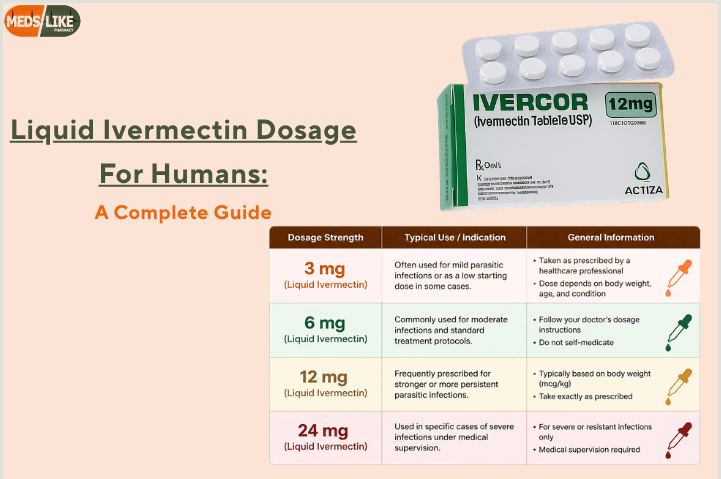
Ivermectin is one of the most widely recognized antiparasitic medications used worldwide. It has been prescribed for decades to treat a range of parasitic infections in both adults and children. As interest in different formulations of this medication continues to grow, many people search for information about liquid ivermectin dosage for humans, including its uses, safety considerations, and how it differs from tablet formulations. Because ivermectin is available in multiple strengths and dosage forms, understanding the proper use of liquid ivermectin is essential. Using the correct formulation and following medical advice can help maximize treatment effectiveness while reducing the risk of side effects and complications. In this guide, we’ll explain what liquid ivermectin is, how ivermectin works, its approved uses, safety considerations, and why dosage recommendations vary from person to person. Liquid ivermectin is a liquid formulation of the antiparasitic medication ivermectin. While oral tablets remain the most commonly prescribed form for human use, liquid formulations may be recommended in certain situations, such as for individuals who have difficulty swallowing tablets or require specialized dosing adjustments. Ivermectin tablet for humans are widely prescribed for several parasitic infections and should be used only under medical supervision. It’s important to understand that not all liquid ivermectin products are intended for human use. Some formulations are specifically manufactured for veterinary purposes and should never be used by humans. Only FDA-approved or physician-prescribed human formulations should be taken. Before starting treatment, always confirm with your healthcare provider whether the tablet, liquid, or topical form of ivermectin is most appropriate for your condition. Ivermectin is an antiparasitic medicine that treats various parasitic infections by targeting and disabling the parasites’ nerve and muscle functions. By disrupting nerve signaling, ivermectin causes paralysis and death of susceptible parasites, allowing the body to naturally eliminate them. This mechanism makes ivermectin effective against several types of parasitic infections. However, because different parasites respond differently to treatment, the dosage, duration, and formulation of ivermectin may vary significantly depending on the specific condition being treated. Healthcare providers prescribe ivermectin for a variety of parasitic infections. Some of the most common conditions treated with ivermectin include: This intestinal infection is caused by parasitic roundworms and often requires prescription antiparasitic treatment. Ivermectin is widely used to treat onchocerciasis, a parasitic disease transmitted through blackfly bites. Microscopic mites cause scabies, a contagious skin infestation. Oral ivermectin may be prescribed when topical treatments are ineffective or unsuitable. This parasitic disease affects the lymphatic system and may require ivermectin as part of combination therapy. Certain ivermectin formulations may be prescribed to treat persistent head lice infestations. Topical ivermectin creams are sometimes recommended to manage inflammatory lesions associated with rosacea. Because each infection affects the body differently, healthcare providers determine the most suitable dosage form and treatment plan based on the patient’s individual condition. One of the most common questions patients ask is why there isn’t a single standard dose that works for everyone. The answer is simple: ivermectin liquid dosage for humans treatment is highly individualized. Several factors influence the appropriate dosage and formulation, including: For this reason, healthcare professionals calculate the appropriate treatment plan after evaluating a patient’s overall health and medical history. The liquid ivermectin dosage chart for humans can differ based on body weight, age, and the specific formulation prescribed. Additionally, ivermectin liquid dosage for humans in ml may be available in different concentrations and strengths. Using the wrong concentration or making assumptions about dosing can increase the risk of serious side effects. Like all medications, ivermectin offers benefits when used correctly and risks when used improperly. Taking an incorrect dose may reduce treatment effectiveness or increase the likelihood of adverse reactions. The ivermectin liquid dosage chart for humans by weight is commonly used by medical professionals to calculate appropriate treatment regimens. Potential risks associated with improper ivermectin use include: In severe cases, overdose or misuse may require emergency medical treatment. One of the biggest concerns involves the accidental use of veterinary ivermectin products. Animal formulations are manufactured for different species, body weights, and treatment purposes. They are not intended for human consumption and may cause serious toxicity if used improperly. If you suspect an overdose or experience severe symptoms after taking ivermectin, seek immediate medical attention. Safe use of liquid ivermectin begins with following your healthcare provider’s instructions carefully. Because liquid medications require precise measurement, even small errors can result in taking too much or too little medication. To reduce risks, consider the following safety guidelines: Read the Product Label Carefully Check that the product is for human use and matches the prescribed concentration. Use Accurate Measuring Devices Avoid estimating doses using household teaspoons or tablespoons, as these measurements are often inaccurate. Never Adjust Your Dose Yourself Do not change or repeat your dose without medical advice. Confirm the Concentration Liquid ivermectin products may vary in strength, making proper identification essential. Inform Your Healthcare Provider About Existing Conditions Patients with liver disease, blood disorders, or weakened immune systems may require additional monitoring. Discuss Pregnancy and Breastfeeding Pregnant or breastfeeding individuals should always consult their healthcare provider before using antiparasitic medications. Common Side Effects These symptoms are generally mild and temporary: Less Common but Serious Side Effects Some individuals experience more serious side effects, including: If you develop severe symptoms or signs of an allergic reaction, seek emergency medical assistance immediately. Yes, humans can take liquid ivermectin, but only approved or physician-prescribed formulations intended for human use. People who have difficulty swallowing tablets or need customized dosing can use liquid formulations. However, patients should never substitute veterinary ivermectin products for medications approved for human use. The safest approach is always to use ivermectin exactly as prescribed and under the supervision of a qualified healthcare professional. When purchasing ivermectin, always choose reputable and trusted suppliers. Buying medications from reliable sources helps ensure product quality, authenticity, and safety. Ivermectin tablets price may vary depending on the dosage strength, brand, quantity, and the pharmacy or supplier. Patients looking to purchase ivermectin online should consider established providers such as Medslike and always follow their healthcare provider’s recommendations regarding usage and dosage. Understanding liquid ivermectin dosage for humans is important for anyone considering this medication for parasitic infections. While liquid formulations can be effective and convenient in certain situations, they require careful handling, accurate measurement, and professional medical supervision.
What Is Liquid Ivermectin?
How Does Ivermectin Work?
Approved Uses of Ivermectin in Humans
Intestinal Strongyloidiasis
Onchocerciasis (River Blindness)
Scabies
Lymphatic Filariasis
Head Lice
Rosacea
Why Is There No Standard Liquid Ivermectin Dosage for Humans?
Risks of Taking the Wrong Dose
Important Safety Considerations
Possible Side Effects of Ivermectin
Can Humans Take Liquid Ivermectin?
Where to Buy Quality Ivermectin
Conclusion
References:


