 +1 305 709 4119 (Click to chat)


Fenbendazole For Dogs Dosage Chart & Weight Calculator

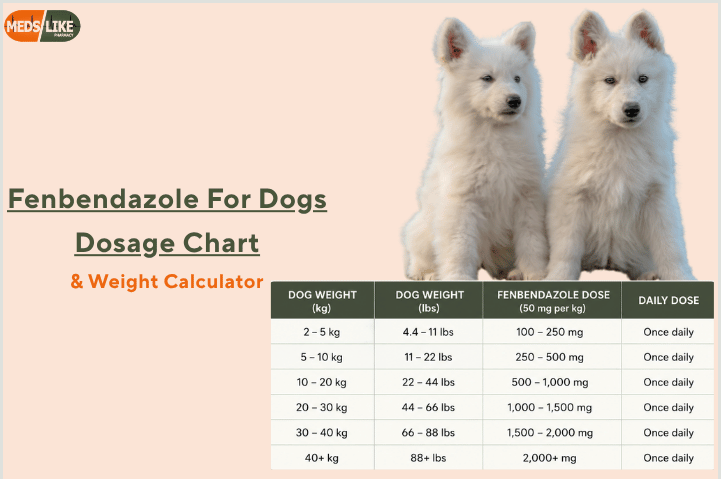
Fenbendazole is a deworming medicine commonly used in dogs to treat certain intestinal parasites. Because the appropriate amount can depend on a dog’s weight, age, health, and the type of parasite being treated, understanding the dosage is important. A fenbendazole for dogs dosage chart can help owners understand how weight may affect the amount used. However, a chart should not replace veterinary advice. A fenbendazole for dogs dosage chart helps explain weight-based dosing. Your veterinarian can confirm whether fenbendazole is appropriate and determine the correct treatment plan for your dog. Fenbendazole is a benzimidazole anthelmintic, or deworming medicine. It works against several types of gastrointestinal parasites in animals. Fenbendazole for cats dosage chart by weight helps organize weight-based dosing information. Veterinarians may use fenbendazole in dogs for parasites such as: The parasites that fenbendazole can treat depend on the specific diagnosis. Not every intestinal parasite responds to the same medication, so identifying the parasite is an important part of treatment. Fenbendazole dosing is generally based on a dog’s body weight and the condition being treated. The formulation and concentration also matter. A commonly referenced veterinary dosing regimen is 50 mg/kg once daily, often given for several consecutive days for certain parasitic infections. However, the appropriate dose and treatment duration can vary by condition and veterinary judgment. The following chart is an illustrative weight-based calculation, not a personalized prescription: Important: These calculations use 50 mg/kg as an example. Fenbendazole dosage chart for dogs shows dosing based on body weight. Do not use them to determine an individual dog’s treatment without veterinary guidance. The basic calculation is: Dog’s weight in kg × prescribed dose in mg/kg = daily amount in mg For example, if a veterinarian recommends 50 mg/kg for a 20-kg dog: 20 kg × 50 mg/kg = 1,000 mg per day This shows the active fenbendazole amount. It does not tell you how much paste, suspension, granule, or tablet to administer. Different products can contain different concentrations, so always check the product label and follow the veterinarian’s instructions. Fenbendazole dosage chart for dogs shows dosing based on body weight. Weight is an important factor in veterinary dosing because giving too little medication may not adequately treat the infection, while an inappropriate amount can increase the risk of adverse effects. Fenbendazole for dog cancer dosage chart is not a standard veterinary dosing guide. For accurate dosing, use your dog’s current body weight rather than an old estimate. Puppies, dogs recovering from illness, and dogs with significant weight changes may need particular attention to accurate weighing. Your veterinarian may also consider: Fenbendazole is available in several veterinary formulations, including granules, oral suspensions, and other preparations. Follow the product directions. Some formulations may be given with food, depending on the product instructions. Do not assume that two products containing fenbendazole can be substituted based only on the amount printed on the package. The concentration and dosing instructions may differ. The treatment duration depends on the parasite and the veterinary treatment plan. Some infections may require treatment for several consecutive days, while other conditions may need a different approach. Fenbendazole for dogs dosage chart by weight helps compare weight-based amounts. For example, treatment for certain intestinal worms may commonly involve a short course. Giardia treatment may also involve several days of therapy, but diagnosis and veterinary guidance are important because reinfection is possible. Do not extend treatment or repeat a course simply because symptoms continue. Persistent diarrhea, vomiting, weight loss, or other symptoms may have another cause or may require additional testing. Fenbendazole is generally well tolerated when used appropriately, but side effects can occur. Possible effects include: If your dog develops severe vomiting, persistent diarrhea, weakness, unusual behavior, facial swelling, difficulty breathing, or another concerning reaction, contact a veterinarian promptly. Fenbendazole for dogs dosage chart ml can help with liquid formulation measurements. Dogs with existing health problems may require additional precautions before receiving any medication. If you forget a scheduled dose, do not automatically give an extra amount to compensate. The appropriate response can depend on how late the dose is and the treatment schedule. Contact your veterinarian or follow the instructions supplied with the prescribed product. Avoid doubling doses unless a veterinary professional specifically tells you to do so. It is better to identify the suspected parasite before starting treatment. Different parasites can cause similar symptoms, including diarrhea, poor appetite, abdominal discomfort, and weight loss. A veterinarian may recommend a fecal examination or other testing to determine the likely cause. Fenbendazole and alcohol are topics worth discussing with a veterinarian before use. This can help ensure that the treatment matches the infection. Self-treating a dog based only on symptoms may delay appropriate care. A fenbendazole for dogs dosage chart can be useful for understanding how weight-based dosing works, but it should not be treated as a substitute for veterinary advice. Remember these points: If your dog has ongoing digestive symptoms, unexplained weight loss, blood in the stool, repeated vomiting, or signs of weakness, seek veterinary care rather than relying only on a dosage chart. Q: How is fenbendazole dosage calculated for dogs? A veterinarian may calculate the amount based on the dog’s weight, the parasite being treated, and the product formulation. Q: Can I use a fenbendazole dosage chart without seeing a veterinarian? A chart can explain weight-based dosing, but it should not replace a veterinary diagnosis or treatment recommendation. Q: How often is fenbendazole given to dogs? The schedule varies depending on the condition and product. Follow the veterinarian’s specific instructions. Q: Can fenbendazole cause side effects in dogs? Yes. Mild digestive upset, vomiting, or diarrhea can occur. Contact a veterinarian if symptoms are severe or persistent. Q: Does fenbendazole treat all worms in dogs? No. Its effectiveness depends on the specific parasite. A veterinarian can recommend proper testing and treatment.
What Is Fenbendazole?
Fenbendazole Dosage for Dogs
Dog’s Weight
Approx. Weight in kg
50 mg/kg Daily Amount
5 lb
2.3 kg
115 mg
10 lb
4.5 kg
225 mg
20 lb
9.1 kg
455 mg
30 lb
13.6 kg
680 mg
40 lb
18.1 kg
905 mg
50 lb
22.7 kg
1,135 mg
60 lb
27.2 kg
1,360 mg
70 lb
31.8 kg
1,590 mg
80 lb
36.3 kg
1,815 mg
100 lb
45.4 kg
2,270 mg
How to Calculate Fenbendazole Dosage by Weight
Why Your Dog’s Weight Matters
How Is Fenbendazole Given to Dogs?
How Long Do Dogs Take Fenbendazole?
Fenbendazole Side Effects in Dogs
What If You Miss a Dose?
Can Fenbendazole Be Used Without a Diagnosis?
Fenbendazole Dosage Chart: Key Takeaways
FAQs
References:


