 +1 305 709 4119 (Click to chat)


Fenbendazole vs Pyrantel Pamoate: Which Parasites Do They Kill?

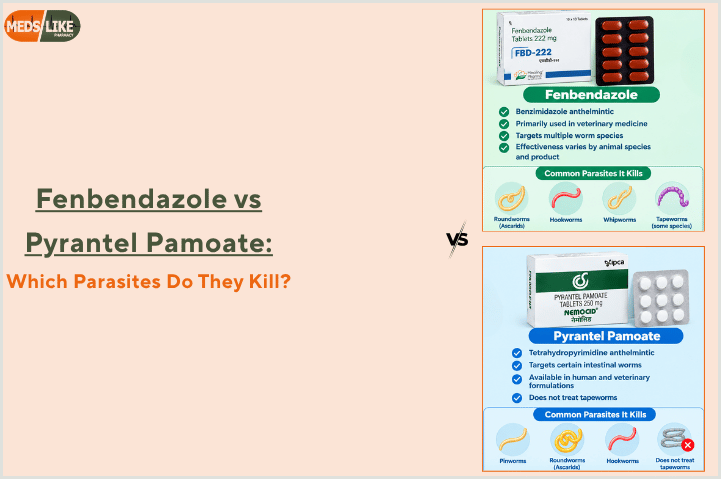
Fenbendazole and pyrantel pamoate are antiparasitic medications used to treat certain intestinal worm infections. Although both target parasites, they work differently and are effective against different types of worms. Understanding their differences can help pet owners and patients make informed decisions about parasite treatment. Fenbendazole vs pyrantel pamoate is an important comparison because neither medication treats every type of parasite. The appropriate treatment depends on the parasite involved, the infected species, and the product’s approved uses. In this guide, we compare fenbendazole vs pyrantel uses, mechanisms of action, parasite coverage, and safety considerations. Fenbendazole is an anthelmintic used mainly in veterinary medicine. It treats certain gastrointestinal worms in animals, including dogs, cats, horses, and livestock, depending on the product’s approval and species-specific labeling. Learn about fenbendazole dosage by weight adults and why medical guidance is essential. Fenbendazole works by interfering with the parasite’s microtubules, which are essential for cellular functions and nutrient absorption. This disruption prevents susceptible parasites from functioning normally and can eventually lead to their death. However, pyrantel pamoate vs fenbendazole does not treat every parasite. Its effectiveness depends on the worm species and the approved treatment regimen. Pyrantel pamoate is an antiparasitic medication used to treat certain intestinal roundworm infections. It is available in human formulations in some countries and is also used in veterinary products. Pyrantel vs fenbendazole works by affecting the nervous system of susceptible worms. It causes neuromuscular paralysis, making it easier for the body to eliminate the parasites through the digestive tract. Pyrantel pamoate is commonly used against pinworms and certain other intestinal worms, depending on the product and the intended species. However, it does not treat every intestinal parasite, and its activity against tapeworms and other parasite groups is limited. The following table summarizes the main differences between these medications. Important: This comparison describes general activity. Actual parasite coverage varies by animal species, medication formulation, country, and product labeling. Fenbendazole is active against several types of gastrointestinal worms in veterinary medicine. Its parasite coverage varies by animal species and product. Fenbendazole treats certain intestinal roundworms in animals. These parasites live in the digestive tract and may cause symptoms such as diarrhea, vomiting, poor growth, or weight loss. The effectiveness of treatment depends on the roundworm species and the animal being treated. Certain hookworm species are susceptible to fenbendazole. Hookworms attach to the intestinal lining and can cause blood loss, intestinal irritation, and anemia, particularly in young or vulnerable animals. Veterinary guidance helps determine the appropriate medication and treatment schedule. Fenbendazole is used against certain whipworm infections, particularly in dogs. Whipworms inhabit the large intestine and may cause diarrhea, inflammation, and weight loss. Not every product is approved for every whipworm species, so checking the product label is important. Depending on the animal species and formulation, fenbendazole may also be effective against certain additional gastrointestinal parasites. However, it should not be assumed to eliminate every worm or parasite. Discover fenbendazole for rabbits, including potential uses and important safety precautions. Fenbendazole is not a universal treatment for tapeworms, flukes, or protozoan infections. The correct diagnosis is essential before choosing a treatment. Pyrantel pamoate primarily targets certain intestinal nematodes, commonly known as roundworms. Pyrantel vs panacur is used to treat pinworm infections in humans in countries where the appropriate formulation is available. Pinworms can cause itching around the anus, particularly at night. Treatment may also require hygiene measures and advice about treating household contacts to reduce reinfection. Follow local medical guidance and the product instructions. Pyrantel vs ivermectin treats certain intestinal roundworm infections. These worms can cause abdominal discomfort and other digestive symptoms, although some infections produce no obvious symptoms. The medication’s effectiveness depends on the particular roundworm species and whether the product is approved for that infection. Certain hookworm infections can be treated with pyrantel formulations. However, treatment recommendations vary by hookworm species, patient population, and local guidelines. A healthcare professional can determine whether pyrantel is appropriate or whether another medication is needed. Pyrantel pamoate vs fenbendazole is not a broad-spectrum treatment for all parasites. It generally does not treat tapeworms, flukes, or protozoan parasites such as Giardia. Different parasites require different treatments, so an accurate diagnosis is important. Neither medication is always better; effectiveness depends on the parasite. The most effective choice depends on the parasite being treated and whether the medication is approved for the intended patient or animal. Do not combine these medications or substitute one for the other without advice from a qualified healthcare professional or veterinarian. Both panacur vs pyrantel medications can cause side effects, although the type and likelihood depend on the formulation, dose, patient, and underlying condition. Fenbendazole: Veterinary formulations may cause digestive upset, including vomiting or diarrhea. Use the medication according to the animal-specific label and veterinary instructions. Pyrantel pamoate: Possible side effects include nausea, abdominal cramps, diarrhea, vomiting, or headache. Follow the directions for the specific human or veterinary product. Additional precautions include: Neither medication should be used as a substitute for identifying the parasite responsible for an infection. Fenbendazole and pyrantel pamoate both treat certain intestinal worm infections, but they differ in how they work and which parasites they target. Veterinarians primarily use fenbendazole to treat several types of gastrointestinal worms in animals. Pyrantel pamoate targets certain intestinal roundworms, including pinworms and some hookworms, and is available in human formulations in some countries. Explore fenbendazole for dogs dosage chart ml and why dosing depends on weight and product strength. The best treatment depends on the parasite, the infected species, and the medication’s approved uses. A healthcare professional or veterinarian can help identify the infection and recommend an appropriate treatment. Q: Can fenbendazole and pyrantel pamoate treat the same parasites? Their activity overlaps against certain intestinal worms, but their parasite coverage is not identical. The appropriate medication depends on the parasite species, the infected host, and the approved product. Q: Does pyrantel pamoate kill tapeworms? Pyrantel pamoate generally does not treat tapeworm infections. A different antiparasitic medication may be needed. Q: Does fenbendazole treat all intestinal parasites? No. Fenbendazole treats certain susceptible worms in animals, but it is not effective against every worm species or protozoan parasite. Q: Can humans take fenbendazole for intestinal worms? Fenbendazole mainly treats animals, and many countries do not approve it for human use. People with suspected worm infections should seek medical advice and use treatments approved for human use. Q: Can I use fenbendazole and pyrantel pamoate together? Do not combine them without professional guidance. Using multiple antiparasitic medications unnecessarily may increase risks without improving treatment outcomes. What Is Fenbendazole?
What Is Pyrantel Pamoate?
Fenbendazole vs Pyrantel Pamoate: Key Differences
Feature
Fenbendazole
Pyrantel Pamoate
Medication Class
Benzimidazole anthelmintic
Tetrahydropyrimidine anthelmintic
Main Action
Disrupts parasite microtubules
Causes paralysis in susceptible worms
Primary Use
Veterinary treatment of certain worms
Treatment of certain intestinal worms in humans and animals, depending on the product
Common Target Parasites
Certain roundworms, hookworms, whipworms, and some other susceptible worms
Pinworms, roundworms, and hookworms, depending on the species and product
Effect on Tapeworms
Limited activity; not effective against all tapeworm species
Generally ineffective against tapeworms
Effect on Protozoa
Not a general treatment for protozoan infections
Not a general treatment for protozoan infections
Human Use
Not routinely approved for human treatment in many countries
Approved human formulations are available in some countries
Veterinary Use
Used in several animal species, depending on the product
Used in certain animals, depending on the product
Which Parasites Does Fenbendazole Kill?
1. Roundworms
2. Hookworms
3. Whipworms
4. Other Susceptible Worms
Which Parasites Does Pyrantel Pamoate Kill?
1. Pinworms
2. Roundworms
3. Hookworms
4. Parasites Pyrantel Generally Does Not Treat
Fenbendazole vs Pyrantel Pamoate: Which Works Better?
Situation
Important Consideration
Certain Intestinal Worms in Dogs
Fenbendazole or pyrantel may be appropriate, depending on the worm species
Pinworm Infection in Humans
Pyrantel pamoate may be an option where an approved human formulation is available
Suspected Tapeworm Infection
Another medication may be required
Suspected Protozoan Infection
A parasite-specific evaluation and treatment may be needed
Unidentified Worm Infection
Testing or professional assessment can help identify the appropriate treatment
Side Effects and Safety Considerations
Conclusion
FAQs
References:


