 +1 305 709 4119 (Click to chat)


10 Best Ways to Make Yourself Pee Safely


Sometimes you urgently need to pee, but nothing happens. Whether you’re at home, in a public restroom, before a medical test, or after intimacy, difficulty urinating can feel frustrating and uncomfortable. The good news is that in many cases, it’s temporary and manageable with simple, safe techniques. If you’re wondering how to make yourself pee quickly, understanding the cause is the first step. From dehydration to anxiety, several common factors can temporarily interfere with normal urine flow. Let’s take a closer look at the reasons behind this issue and the practical steps you can take to fix it. Difficulty urinating can occur for several common reasons, and identifying the cause is key to finding the right solution. Dehydration is one of the most frequent triggers—if you’re not drinking enough water, your bladder may not be full enough to signal the urge to pee. Stress and anxiety can also interfere, as nervousness tightens the pelvic muscles and makes relaxation difficult. Many people experience public restroom anxiety, often called shy bladder, where a mental block prevents normal urine flow. Does Cialis make you pee more? Some men may notice mild changes in urinary flow because Cialis relaxes smooth muscles in the bladder and prostate. How to make someone pee instantly can involve simple techniques like running water sounds or encouraging relaxation to help stimulate natural urination. Understanding the root cause helps you choose the safest and most effective way to trigger urination naturally. Hydration is the simplest solution. If you’re struggling to pee, your bladder may not be full enough to trigger the urge. Drinking a glass or two of water can stimulate urine production within 20–30 minutes. For overall bladder health, aim for around 6–8 glasses of water daily unless advised otherwise by your doctor. Avoid holding urine for too long, as it can weaken bladder muscles over time. How to make yourself desperate to pee often starts with drinking plenty of fluids safely and allowing time for your bladder to fill naturally. The sound of running water is surprisingly effective. Turning on a faucet or playing water sounds on your phone can stimulate your brain and relax the bladder. This works because your brain associates flowing water with urination, helping trigger a natural response. The quickest way to pee is usually to relax your body, lean slightly forward, and listen to running water to trigger the urge. It’s especially helpful in public restrooms when anxiety blocks urine flow. How to make yourself go pee can be as simple as drinking warm fluids and sitting comfortably to encourage bladder emptying. How do you make yourself pee more easily? Staying hydrated and calming your mind can naturally support urine flow. Double voiding helps fully empty your bladder. Here’s how: This technique allows your bladder muscles to relax further, releasing any remaining urine. It’s particularly helpful for those who feel like they haven’t completely emptied their bladder. How to make yourself pee in 30 seconds may include turning on a faucet, adjusting your posture, and taking deep breaths to relax pelvic muscles. Light pressure or gentle rubbing on your lower abdomen (just above the pelvic bone) may help activate bladder muscles. Do not press hard. Gentle stimulation can encourage muscle relaxation and support urine flow. This is a safe, non-invasive technique when used carefully. How to make yourself pee for urine test often involves drinking water in advance and avoiding stress that may block urination. Your body posture plays an important role in bladder function and can directly affect how easily you urinate. If you’re wondering how to make yourself pee right away, adjusting your position may help stimulate urine flow naturally. Does Viagra make you pee a lot? Viagra does not usually increase urination, but individual responses can vary depending on overall health and hydration. Sit upright on the toilet and lean slightly forward to help straighten the urinary tract. Keep your feet flat on the floor, relax your shoulders, and allow your knees to stay slightly apart. This position reduces pressure on the bladder and pelvic muscles, making it easier for urine to pass smoothly and comfortably. Stress is one of the biggest reasons people struggle to pee, especially in public. Take slow, deep breaths: Focus on relaxing your pelvic muscles. Avoid forcing it—straining can make things worse. Patience often works better than pressure. Warmth helps relax muscles. You can: Heat improves circulation and reduces tension, which may stimulate urination naturally. How can you make yourself pee quickly? Gentle movement, hydration, and proper posture can help stimulate your bladder. Warm drinks like herbal tea or coffee can stimulate the bladder. How do you make yourself pee faster when you’re struggling? Try relaxing your shoulders, leaning forward, and focusing on steady breathing. Caffeine acts as a mild diuretic, meaning it increases urine production. However, don’t overdo it—too much caffeine can irritate the bladder and cause discomfort. Moderation is key. It may sound unusual, but looking at yourself in the mirror while sitting on the toilet can sometimes help. Your brain responds to visual cues. Seeing yourself in a bathroom setting may activate the natural urination response and help overcome mental blocks. This technique works best when anxiety is the main cause. How to make yourself pee faster may involve drinking a warm beverage and giving your bladder a few minutes to respond. If you’ve been sitting for a long time, try walking around for a few minutes. Gentle movement stimulates circulation and can encourage bladder activity. Even simple stretches may help activate the urge to urinate. Physical activity naturally supports digestion and urinary function. How to make yourself pee fast naturally works best with hydration, relaxation, and simple bladder-stimulating techniques. If you frequently struggle to urinate, experience pain, or cannot pee at all, seek medical attention immediately. Persistent urinary problems may be linked to: A healthcare professional can diagnose the cause and recommend appropriate treatment. Never ignore severe pain or a complete inability to urinate—it can become a medical emergency. Q: Why is it important to pee after sex? Urinating after sex helps flush bacteria from the urinary tract, reducing the risk of infections. Q: How can I make myself pee after sex? Drink water, relax your body, sit comfortably, and try warm water techniques if needed. Q: Can anxiety prevent urination? Yes. Stress tightens pelvic muscles, making it harder for urine to flow. Q: Is difficulty urinating always serious? Not always. Temporary issues are common, but persistent symptoms require medical evaluation. Difficulty urinating is common and usually temporary. Dehydration, anxiety, posture, or muscle tension are often the cause. Fortunately, simple methods like drinking water, relaxing, adjusting posture, or using warm water can help trigger urination safely. However, if the problem becomes frequent, painful, or severe, don’t ignore it. Seeking medical advice ensures your bladder health remains strong and complication-free. ‘Certain medications, like can bluechew make you bigger or longer may affect bladder function, while ongoing muscle tension in the pelvic area can physically restrict urine release. Temporary difficulty urinating after sex or with an erection is also common and usually harmless. By understanding your body and using these practical techniques, you can make yourself pee quickly and comfortably whenever needed.
Why Do Some People Have Trouble Peeing?
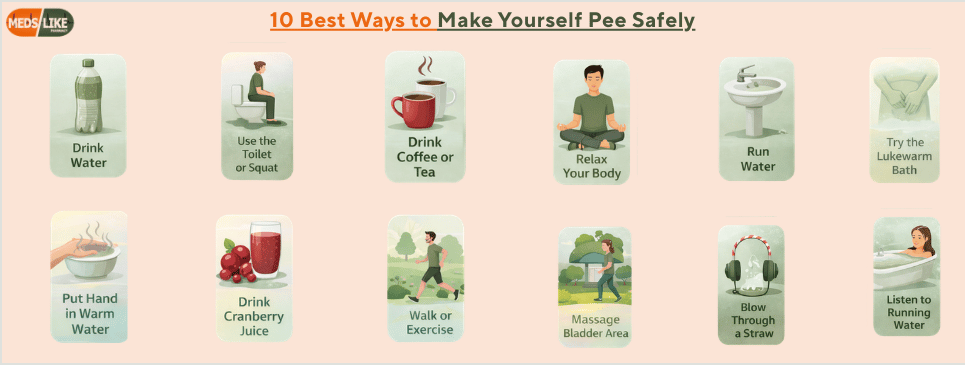
Drink More Water
Listen to Running Water
Try the Double Voiding Technique
Gently Stimulate Your Lower Abdomen
Adjust Your Body Position
Relax Your Mind and Breathe Deeply
Use Warm Water
Drink a Warm Beverage (In Moderation)
Try the Mirror Trick
Light Walking or Gentle Movement
Seek Medical Help if Needed
FAQs
Final Thoughts
References:


