 +1 305 709 4119 (Click to chat)


Fenbendazole For Chickens Dosage Chart: Safe Deworming Guide

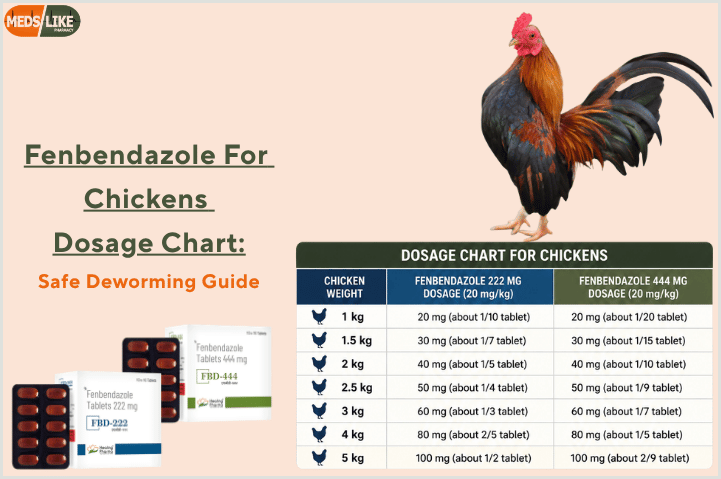
Keeping chickens healthy requires proper nutrition, clean housing, and effective parasite control. Internal worms can reduce growth, decrease egg production, and weaken a flock’s overall health. Many poultry owners rely on fenbendazole to control common intestinal worms in chickens. Understanding the correct dosage and administration methods is essential to ensure safe and effective treatment. This guide explains how fenbendazole works, when to use it, and provides a helpful fenbendazole for chickens dosage chart for reference. Fenbendazole is a broad-spectrum antiparasitic medication commonly used in livestock, poultry, dogs, and other animals. It belongs to the benzimidazole class of drugs and works by disrupting the energy metabolism of parasites, causing them to die and be expelled from the body. A fenbendazole dosage calculator can help determine the correct amount of medication based on the animal’s weight and prescribed dosage. In chickens, fenbendazole is often used to treat: Regular deworming can improve flock health, increase productivity, and reduce the spread of parasites among birds. Fenbendazole for chickens helps treat internal parasites, including roundworms, cecal worms, and gapeworms. Many chickens show few symptoms during the early stages of infestation. However, a heavier worm burden can lead to noticeable health issues. Common signs include: If several birds display these symptoms, consult a veterinarian and consider fecal testing before beginning treatment. How much fenbendazole for chickens? The correct dose typically depends on the bird’s body weight. Important: Always follow the instructions provided with your specific fenbendazole product or consult a poultry veterinarian for individualized dosing recommendations. Fenbendazole is available in several formulations, including: Oral Suspension Liquid suspensions are among the easiest options for backyard poultry keepers. The medication can be administered directly into the bird’s mouth using a dosing syringe. Feed Mixing Some poultry owners mix fenbendazole into feed. Practical for flock treatment, but dosing each bird can be difficult. Paste Formulations Fenbendazole paste is commonly used in larger animals but may also be carefully measured and administered to chickens under veterinary guidance. Regardless of the method used, accurate dosing is critical to achieving successful parasite control. Fenbendazole veterinary medicine is widely used by veterinarians to treat various parasitic worm infections in animals and livestock. Fenbendazole remains a popular choice because it offers several advantages: Broad-Spectrum Activity Targets multiple intestinal worms with one treatment. Easy Administration Available in liquid, powder, and paste forms. Effective Parasite Control When administered correctly, it helps eliminate worm infestations and supports improved health and productivity. Suitable for Flock Treatment Many poultry keepers use fenbendazole to treat entire groups of birds simultaneously, helping reduce reinfection rates. There is no universal deworming schedule that works for every flock. Factors such as climate, stocking density, and exposure to wild birds can influence parasite risks. Many poultry owners consider deworming: Routine monitoring often yields better results than deworming on a fixed schedule in the absence of evidence of infection. Although fenbendazole is generally well tolerated, poultry owners should follow proper safety guidelines. Avoid Overdosing Excessive doses may increase the risk of adverse effects and unnecessary medication exposure. Monitor Birds During Treatment Observe chickens for unusual behavior, changes in appetite, or digestive disturbances. Follow Product Instructions Different products contain varying concentrations of fenbendazole. Always verify the strength before calculating doses. Consult a Veterinarian Seek veterinary guidance when treating chicks, breeding birds, or unhealthy chickens. Most chickens tolerate fenbendazole well. Mild side effects may occur occasionally. Possible reactions include: Severe reactions are uncommon but should be evaluated by a veterinarian immediately if they occur. Many poultry keepers search for a fenbendazole for chickens dosage chart tractor supply to compare available deworming products and dosing recommendations. Medication alone cannot prevent reinfection. Follow these preventive measures: Maintain Clean Housing Regularly remove droppings and replace bedding to reduce parasite buildup. Rotate Grazing Areas If chickens free-range, rotating access areas can decrease parasite exposure. Control Moisture Wet conditions often promote parasite survival and spread. Quarantine New Birds Isolate new flock members before introducing them to established chickens. Perform Regular Health Checks Regular flock monitoring helps detect problems early. If you are wondering when does fenbendazole expire, always check the expiration date on the packaging and avoid using the product after it has expired. Internal parasites can significantly impact the health and productivity of backyard and commercial poultry flocks. Using a proper fenbendazole for chickens dosage chart helps ensure safe and effective treatment while minimizing the risk of underdosing or overdosing. A fenbendazole for chickens dosage chart PDF can help poultry owners quickly find the correct dosage based on their birds’ weight. Accurate dosing, good sanitation practices, and regular flock monitoring are the foundations of successful parasite management. Responsible deworming and preventive care help keep chickens healthy and productive. Q: Can Fenbendazole Be Used in All Chicken Breeds? Yes. Fenbendazole is commonly used across many chicken breeds. Dosage should be based on body weight rather than breed type. Q: How Quickly Does Fenbendazole Work? The medication begins affecting parasites soon after administration, although complete elimination may take several days. Q: Can I Treat an Entire Flock at Once? Many poultry keepers choose flock-wide treatment when multiple birds are affected. Ensure all chickens receive an appropriate dose. Q: Is Veterinary Advice Necessary? While experienced poultry owners often administer fenbendazole themselves, veterinary guidance is recommended for accurate diagnosis and treatment planning.
What Is Fenbendazole?
Signs Your Chickens May Have Worms
Fenbendazole for Chickens Dosage Chart
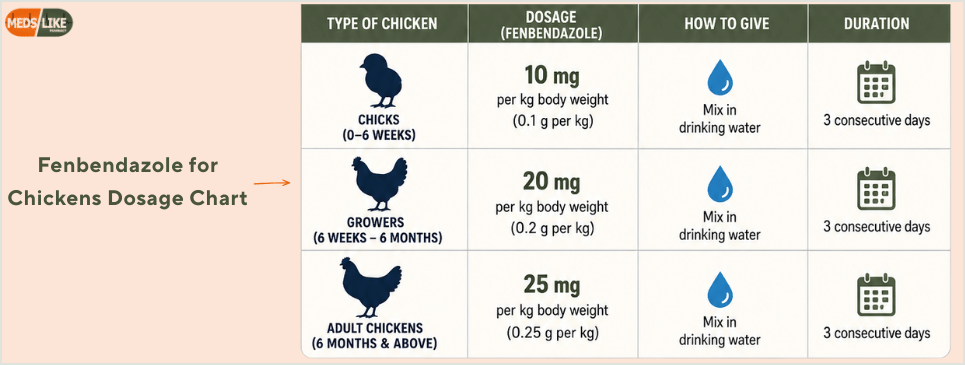 The correct dosage depends on the product strength and veterinary guidance. Fenbendazole dosage guide for chickens.
Chicken Weight
Approximate Fenbendazole Dose (20 mg/kg)
1 lb (0.45 kg)
9 mg
2 lbs (0.9 kg)
18 mg
3 lbs (1.36 kg)
27 mg
4 lbs (1.8 kg)
36 mg
5 lbs (2.27 kg)
45 mg
6 lbs (2.72 kg)
54 mg
7 lbs (3.18 kg)
63 mg
8 lbs (3.63 kg)
72 mg
9 lbs (4.08 kg)
81 mg
10 lbs (4.54 kg)
90 mg
How to Administer Fenbendazole to Chickens
Benefits of Using Fenbendazole in Chickens
When Should You Deworm Chickens?
Safety Considerations
Potential Side Effects
Preventing Future Worm Infestations
Conclusion
FAQ
References:


