 +1 305 709 4119 (Click to chat)


Is Semen Retention Healthy? Facts & Benefits Of Not Ejaculating

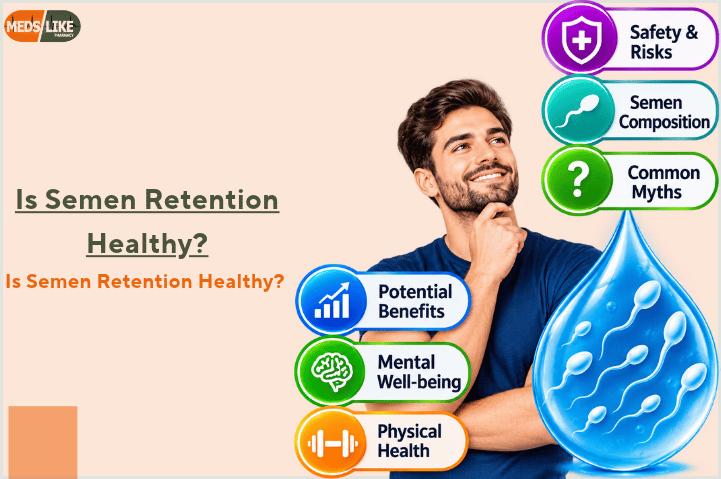
Semen retention has become a popular topic in men’s health, particularly among people interested in improving physical health, mental well-being, and sexual performance. The practice involves intentionally avoiding ejaculation for a certain period, either by abstaining from sexual activity or controlling the urge to ejaculate.
Some people believe that retaining semen can improve mood, increase energy, reduce stress, and support testosterone levels. However, not all these claims are supported by scientific research. Understanding how semen works and what happens when you avoid ejaculation can help separate common myths from medical facts.
What Is Semen Retention?
Semen retention is the intentional practice of avoiding ejaculation during sexual activity or masturbation. Some people practise it for personal, cultural, spiritual, or health-related reasons. Vidalista 20 is a tadalafil-based medication used to treat erectile dysfunction by improving blood flow to the penis. The semen retention timeline explains the potential physical and psychological changes that may occur when a person stops ejaculating.
The idea behind sperm retention is that avoiding ejaculation may help conserve physical energy and improve self-control. However, there is currently limited scientific evidence showing that semen retention provides significant physical or hormonal benefits.
It is generally safe for healthy men to avoid ejaculation for extended periods. The body naturally manages unused sperm, breaking it down and reabsorbing it.
What Causes Semen Loss?
Semen is released from the penis during ejaculation, usually following sexual stimulation and orgasm. Several normal biological processes can cause semen to leave the body, including:
- Sexual intercourse: Ejaculation commonly occurs during sexual activity.
- Masturbation: Stimulation of the penis can lead to ejaculation.
- Wet dreams: Nocturnal emissions involve involuntary ejaculation during sleep.
- Spontaneous ejaculation: Some men experience ejaculation without direct sexual stimulation.
- Medical conditions: Certain reproductive or neurological conditions can cause unusual fluid leakage or changes in ejaculation.
These processes are generally normal. Semen loss does not automatically indicate weakness, nutritional deficiency, or poor sexual health.
What Is So Important About Male Semen?
Semen plays an essential role in male reproduction. It transports sperm from the reproductive system into the female reproductive tract, where sperm may fertilise an egg.
Semen also provides nutrients and other substances that help protect sperm and support their movement. Without the fluid produced by the reproductive glands, sperm would have a less suitable environment for travelling through the reproductive tract.
What Else Does Semen Contain?
Semen is a mixture of sperm cells and fluids produced by different reproductive glands. Its composition includes:
- Water
- Fructose
- Proteins and enzymes
- Zinc
- Calcium
- Magnesium
- Potassium
- Citrate
- Other organic compounds
These components help nourish sperm, support their movement, and maintain an environment suitable for fertilisation.
What Is the Purpose of Semen?
The primary purpose of semen is to transport sperm during reproduction. Its fluid components provide energy, protection, and a suitable environment for sperm to travel.
Fructose, for example, acts as an energy source for sperm movement. Other substances help regulate the fluid’s consistency and protect sperm during their journey through the female reproductive tract.
Is It Safe to Consume Semen?
Swallowing semen is generally not harmful when both partners are healthy and free from sexually transmitted infections (STIs). However, oral sex can transmit infections such as gonorrhoea, chlamydia, herpes, syphilis, and HPV.
Barrier protection helps lower infection risk. It is also important to understand that swallowing semen does not cause pregnancy because the digestive system is separate from the reproductive system.
Semen is not considered a meaningful source of nutrition, so consuming it does not provide significant dietary or health benefits.
Is It Healthy to Retain Semen?
For most healthy men, semen retention is generally safe. Avoiding ejaculation does not cause sperm to accumulate dangerously because the body naturally breaks down and reabsorbs unused sperm.
However, there is no strong scientific evidence that semen retention improves overall health, increases testosterone permanently, or enhances physical strength.
Some men may experience temporary sexual frustration or discomfort when they avoid ejaculation while sexually aroused. These effects usually resolve naturally.
Potential Benefits of Semen Retention: What Does Science Say?
Several benefits are commonly associated with semen retention. Scientific evidence remains limited.
1. Keeping Semen May Improve Mood
Some people report feeling more motivated, focused, or emotionally balanced while practising semen retention.
These experiences may be related to personal discipline, changes in sexual habits, or individual expectations. However, there is insufficient clinical evidence to establish that retaining semen directly improves mood.
2. It Could Improve Stress-Reduction Skills
Avoiding ejaculation may encourage some individuals to develop greater awareness of their sexual habits and impulses.
This can help them practise self-control and manage distractions. However, semen retention itself has not been established as a treatment for stress or anxiety.
3. Might Influence Gravid Women’s Immune Responses
Semen contains biological substances that can interact with the female reproductive tract and influence local immune activity. Women Viagra before and after photos explore the claimed effects of Viagra on women, although its effectiveness for female sexual dysfunction is not established.
Some research suggests that exposure to seminal fluid may contribute to immune adaptations associated with pregnancy. However, these findings do not establish that semen exposure improves pregnancy outcomes or prevents complications.
4. Potential Anti-Inflammatory Properties of Semen
Seminal fluid contains proteins, enzymes, and other biological compounds involved in regulating immune responses.
Some of these substances influence inflammation-related processes in the reproductive tract. However, this does not mean that semen acts as a general anti-inflammatory treatment or provides proven health benefits when consumed.
Semen Nutrient Value
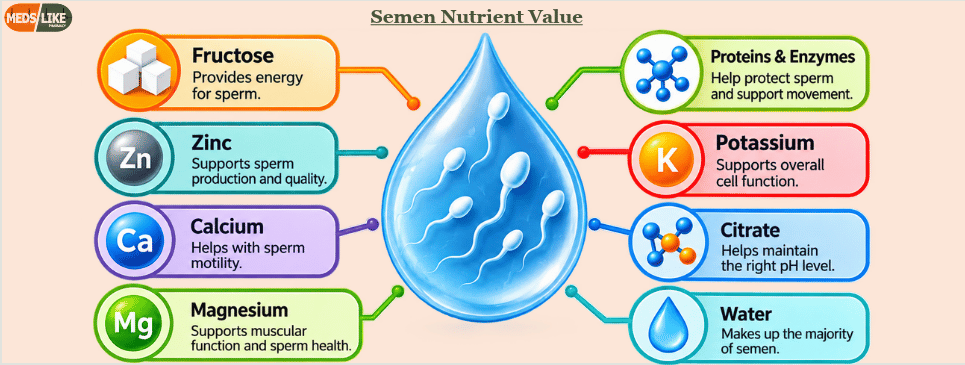
Semen contains small quantities of nutrients, including fructose, zinc, calcium, magnesium, and potassium. These substances support sperm function and reproductive processes. However, the total volume of semen is relatively small, meaning its nutritional contribution to the body is negligible. Therefore, semen should not be considered a substitute for a balanced diet or a nutritional supplement.
Where Do They Store Semen?
The testes produce sperm cells, which mature in a coiled tube called the epididymis located behind each testicle. Mature sperm are stored in the epididymis until ejaculation. During ejaculation, sperm travel through the reproductive ducts and mix with fluids from the seminal vesicles and prostate gland to form semen.
The body does not store semen in a large reservoir. When ejaculation does not occur, unused sperm are naturally broken down and reabsorbed by the body.
What Is Used to Make Semen?
Semen is produced through the combined activity of several reproductive organs:
- Testicles: Produce sperm cells.
- Seminal vesicles: Produce most of the fluid in semen, including fructose.
- Prostate gland: Adds fluid containing enzymes and other substances that support sperm function.
- Bulbourethral glands: Produce a small amount of lubricating fluid.
Together, these components create the seminal fluid released during ejaculation.
Semen Could Aid in the Fight Against Cancer: Is It True?
There is no reliable scientific evidence that semen itself fights cancer or prevents cancer development.
Some observational studies have found an association between more frequent ejaculation and a lower risk of prostate cancer. However, this does not prove that ejaculation prevents cancer or that retaining semen increases cancer risk.
According to the Mayo Clinic, current research has not established a conclusive protective relationship between frequent ejaculation and prostate cancer.
Regular medical check-ups and established preventive healthcare remain important for men’s health.
Does Semen Contain Testosterone, and Can It Increase Libido?
Semen may contain trace amounts of hormones and other biological substances, but it is not a meaningful source of testosterone. Semen retention Reddit discussions share personal experiences, opinions, and different perspectives on the practice. Viagra results photos show visual examples of changes associated with erectile dysfunction treatment and improved erections.
Testosterone is mainly produced in the testicles. It plays an important role in male sexual desire, sperm production, muscle development, and other bodily functions.
There is no convincing scientific evidence that retaining semen significantly increases testosterone levels or directly improves libido.
Final Thoughts
Semen retention is generally safe for healthy men, but many of its advertised benefits remain scientifically unproven. Although semen contains important reproductive components, avoiding ejaculation does not guarantee higher testosterone, better mood, improved fertility, or protection against disease.
FAQs
Q: Does semen retention increase testosterone?
There is insufficient scientific evidence that semen retention produces a sustained increase in testosterone.
Q: What happens if a man does not ejaculate for a long time?
The body naturally breaks down and reabsorbs unused sperm. Some men may also experience wet dreams or spontaneous ejaculation.
Q: Does semen retention improve sperm quality?
Not necessarily. Longer periods without ejaculation may increase semen volume and total sperm count, but shorter abstinence intervals can be associated with better sperm motility. The effects vary between individuals.
Q: Is semen retention necessary for good male health?
No. Semen retention is a personal choice rather than a medical requirement. Both regular ejaculation and periods of abstinence are generally normal for healthy men.
References:


