 +1 305 709 4119 (Click to chat)


Parasite Infection Symptoms In Adults: 10 Signs To Watch For

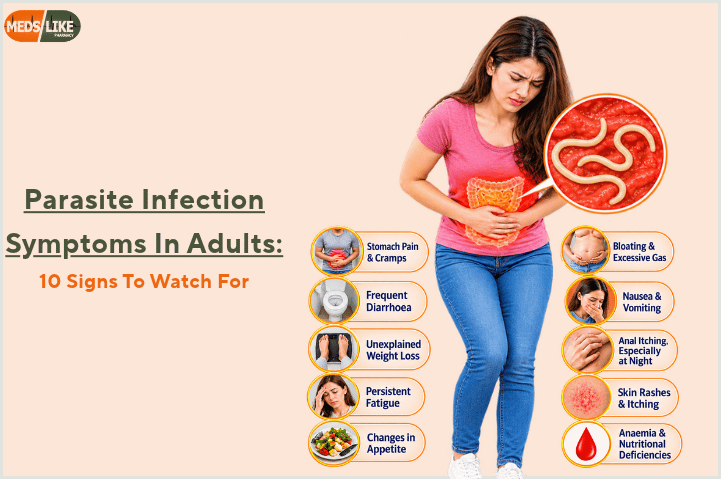
Parasite infections can affect people of all ages, including adults. These infections occur when parasites enter the body and use the host’s nutrients or tissues to survive. Depending on the type of parasite, an infection may affect the intestines, skin, blood, or other organs. Recognising parasite infection symptoms in adults is important because some infections cause noticeable digestive problems, while others may produce mild or no symptoms. Common warning signs include stomach pain, diarrhoea, unexplained weight loss, fatigue, and changes in appetite. Understanding these symptoms can help you seek timely medical attention, receive an accurate diagnosis, and get appropriate treatment. A parasite infection occurs when an organism lives on or inside another organism and benefits at the host’s expense. Explore information about fenbendazole ivermectin pills and their uses. Parasites can enter the human body through contaminated food or water, insect bites, contact with infected soil, or close contact with infected individuals. Learn about parasitic infection intestinal symptoms and common digestive warning signs. Common types of human parasites include: Symptoms depend on the parasite involved, the affected body part, and the infection’s severity. Parasite infections can cause different symptoms. Here are 10 signs that may indicate a possible infection. Understand parasitic intestinal infection symptoms and their possible causes. Stomach pain is a common symptom of intestinal parasite infections. Some parasites irritate the digestive tract, causing abdominal discomfort, bloating, or cramping. The pain may come and go or become more noticeable after eating. However, abdominal pain can have several other causes, including indigestion, food intolerance, and gastrointestinal conditions. If stomach discomfort continues or becomes severe, consult a healthcare professional. Discover common parasite infection symptoms and available treatment options. Persistent or recurring diarrhoea may occur when parasites affect the digestive system. Certain intestinal parasites interfere with normal digestion and nutrient absorption, leading to loose or watery stools. Some infections may also cause greasy, foul-smelling stools or increased bowel movements. Explore the symptoms of a parasitic infection and when to seek medical advice. Diarrhoea lasting several days, particularly when accompanied by dehydration, fever, or abdominal pain, requires medical evaluation. Losing weight without changing your diet or physical activity can sometimes indicate an underlying health problem, including a parasitic infection. Certain intestinal parasites interfere with nutrient absorption or affect appetite. Over time, this may contribute to unintended weight loss. However, unexplained weight loss is not specific to parasite infections. Thyroid disorders, digestive conditions, diabetes, and other medical problems can also cause it. Feeling unusually tired or weak despite getting enough sleep may be another possible symptom. Some parasitic infections can contribute to fatigue by causing inflammation, poor nutrient absorption, or anaemia. For example, certain hookworm infections can lead to blood loss and iron-deficiency anaemia. If fatigue continues alongside digestive problems, dizziness, or weakness, speak with a healthcare professional. A parasite infection may affect appetite in different ways. Some people experience reduced hunger, while others notice unusual changes in their eating habits. Digestive issues, nausea, and inflammation can affect appetite. Although appetite changes can occur during parasitic infections, they are also associated with stress, hormonal changes, medications, and other health conditions. Frequent bloating, excessive gas, and abdominal fullness may occur with certain intestinal parasite infections. For example, Giardia infection can interfere with digestion and cause gas, bloating, and discomfort. Symptoms may worsen after eating. However, food intolerances, irritable bowel syndrome (IBS), and other digestive disorders can cause similar problems. Some parasitic infections can irritate the digestive system, resulting in nausea and occasional vomiting. These symptoms may occur alongside abdominal cramps, diarrhoea, or changes in appetite. Persistent vomiting can lead to dehydration, especially when accompanied by diarrhoea. Seek medical attention if you cannot keep fluids down or experience signs of dehydration. Persistent itching around the anus, particularly at night, is a recognised symptom of pinworm infection. Pinworms are small, thin worms that live in the intestines. Female worms typically lay eggs around the anus at night, which can cause itching and discomfort. Scratching the affected area may spread the eggs to the hands, clothing, bedding, and nearby surfaces. If you experience recurring nighttime anal itching, consult a healthcare professional for appropriate testing and treatment. Some parasites trigger skin rashes, irritation, and itching. For example, some parasitic infections involve the skin directly, while others may trigger inflammatory or allergic reactions. Scabies, caused by microscopic mites, commonly produces intense itching and a rash, often worse at night. Not every unexplained rash indicates a parasite infection. Allergies, eczema, and other skin conditions can produce similar symptoms. Some intestinal parasites can affect nutrient absorption or cause blood loss, potentially resulting in anaemia and nutritional deficiencies. Hookworm infections, for example, can cause intestinal blood loss and iron-deficiency anaemia. Possible symptoms include: A blood test can help identify anaemia and determine whether further investigation is needed. Understand fenbendazole dosage by weight adults and why medical guidance is important. Common sources of infection include: Practising good hygiene and following safe food preparation habits can help reduce the risk of infection. If you experience symptoms that suggest a possible parasite infection, a healthcare professional may recommend specific tests based on your medical history and symptoms. Common diagnostic methods include: The appropriate test depends on the suspected parasite and the symptoms involved. Treatment depends on the type of parasite, the affected body part, and the severity of the infection. Healthcare professionals may prescribe antiparasitic medications, such as: These medications are not interchangeable, and no single antiparasitic medicine treats every infection. The correct medication, dose, and treatment duration depend on the diagnosis. Avoid taking antiparasitic medication without medical advice. Incorrect treatment may delay proper care or cause unnecessary side effects. Simple hygiene and food safety practices can help reduce your risk of parasitic infections. Occasional stomach discomfort does not necessarily mean you have a parasite infection. However, persistent diarrhoea, unexplained weight loss, recurring abdominal pain, nighttime anal itching, or ongoing fatigue should not be ignored. Seek prompt medical attention if you experience bloody stools, severe abdominal pain, persistent vomiting, high fever, or signs of significant dehydration. Learn how long does ivermectin last after expiration date and why expired medication should be avoided. Early diagnosis can help identify the underlying cause and ensure you receive appropriate treatment. Recognising parasite infection symptoms in adults can help you understand when digestive problems, unexplained weight loss, fatigue, or skin irritation may require medical attention. Although these symptoms can occur with parasitic infections, they may also indicate other health conditions. Therefore, proper testing and medical evaluation are important before starting treatment. Maintaining good hygiene, drinking safe water, and following food safety practices can help lower your risk of infection. If symptoms persist, consult a healthcare professional for an accurate diagnosis and appropriate care.
What Is a Parasite Infection?
10 Common Parasite Infection Symptoms in Adults
1. Persistent Stomach Pain and Abdominal Cramps
2. Frequent Diarrhoea
3. Unexplained Weight Loss
4. Persistent Fatigue and Weakness
5. Changes in Appetite
6. Bloating and Excessive Gas
7. Nausea and Vomiting
8. Anal Itching, Especially at Night
9. Skin Rashes and Itching
10. Anaemia and Nutritional Deficiencies
How Do Adults Get Parasite Infections?
How Are Parasite Infections Diagnosed?
Treatment Options for Parasite Infections in Adults
How to Prevent Parasite Infections
When Should You See a Doctor?
Final Thoughts
References:


