 +1 305 709 4119 (Click to chat)


Albendazole vs Fenbendazole Difference: Which One Is Better?


Parasitic infections are becoming increasingly common in many parts of the world, including the United States. These infections can spread through multiple sources such as contaminated food, undercooked meat, poor hygiene, close contact with infected individuals, or even international travel. Since different types of worms can affect the human body, choosing the right broad-spectrum deworming treatment becomes important. This is where the comparison of Albendazole vs Fenbendazole becomes relevant. Fenbendazole for cancer has gained attention online, but it does not have approved clinical evidence for cancer treatment in humans. Both drugs belong to the same class of anthelmintic medications, but they differ significantly in their approval status, usage, and safety profiles. Let’s explore their differences in detail. Albendazole is an FDA-approved antiparasitic medication used to treat a wide range of worm infections in humans. It is commonly prescribed for infections such as roundworm infections, hookworm infections, pinworm infections, tapeworm infections, hydatid disease, neurocysticercosis, and Giardia-related infections. Albendazole is widely used in clinical practice because of its effectiveness against both intestinal and tissue-dwelling parasites. Fenbendazole is an antiparasitic medication primarily used in veterinary medicine to treat intestinal worm infections in animals such as dogs and cattle. It is effective against roundworms, hookworms, whipworms, and pinworms in animals. Although it is chemically similar to albendazole, fenbendazole is not officially approved for human use in most countries and is mainly used under veterinary supervision for short-term deworming in animals. Both medications belong to the benzimidazole class and share a similar mechanism of action. They target the internal structure of parasites, ultimately leading to their death. This benzimidazole anthelmintic works by blocking the polymerization of tubulin in parasitic worms. Tubulin is an essential protein required for the formation of microtubules, which play a key role in nutrient absorption and cell division within the parasite. By inhibiting this process, the drug disrupts the worms’ ability to absorb glucose, depriving them of energy. As a result, the parasites gradually weaken, die over time, and are eventually eliminated from the body within a few days. Fenbendazole also works by binding to tubulin and preventing the formation of microtubules, leading to similar effects such as loss of nutrient absorption, energy depletion, and eventual parasite death over time. However, fenbendazole primarily remains active within the gastrointestinal tract, so its action is mostly localized to the intestines rather than affecting systemic tissues in the body. Albendazole is used in humans for: It is considered a broad-spectrum systemic dewormer. Fenbendazole is mainly used in veterinary practice for: Regulatory authorities do not officially approve its use in humans. The dosage of albendazole depends on: In some cases, a single dose is enough, while in others, treatment may last several days or weeks. Fenbendazole is typically administered in animals for: Human dosage is not officially established due to lack of regulatory approval. Serious side effects are rare when used appropriately under professional supervision. Clinical studies strongly support albendazole use in humans, and healthcare professionals widely prescribe it. Doctors consider it safe when patients use it at recommended doses. Fenbendazole, while effective in animals, lacks sufficient human clinical trials. This limitation makes doctors avoid recommending self-medication or off-label human use. Fenbendazole and alcohol do not have well-established interaction studies, so people should avoid combining them without medical supervision. The search for “albendazole vs fenbendazole differences” is common because both deworming medications belong to the same drug class. While their mechanisms of action are similar, they differ in regulatory approval, dosage strength, and parasite-specific effectiveness. Doctors use albendazole for a broader range of systemic helminth infections, while they use fenbendazole mainly for intestinal parasite control. Despite these differences, both drugs work by inhibiting microtubule synthesis in parasites. Is albendazole the same as fenbendazole is a common question, but both drugs differ in approval, usage, and safety profiles. The answer depends entirely on medical context. Ultimately, a qualified healthcare provider determines the best choice based on diagnosis and patient condition. Understanding the difference between Fenbendazole vs albendazole is important for safe and effective parasite treatment. While both drugs are chemically similar and act by disrupting parasite survival mechanisms, their usage differs significantly. Albendazole vs fenbendazole for humans shows that albendazole is approved for human use, while fenbendazole is mainly restricted to veterinary applications. Q: Can Albendazole be used in animals? Yes, but only under veterinary supervision in specific cases. Q: Is Albendazole stronger than Fenbendazole? Albendazole has broader systemic activity in humans, while fenbendazole is mainly intestinal and veterinary. Q: Can they be used together? Doctors do not recommend combining them without medical guidance. Q: Which is better for deworming humans? Albendazole is the preferred and approved option for humans.
What is Albendazole?
What is Fenbendazole?
How Do Albendazole and Fenbendazole Work?
Mechanism of Albendazole
Mechanism of Fenbendazole
Key Uses of Albendazole vs Fenbendazole
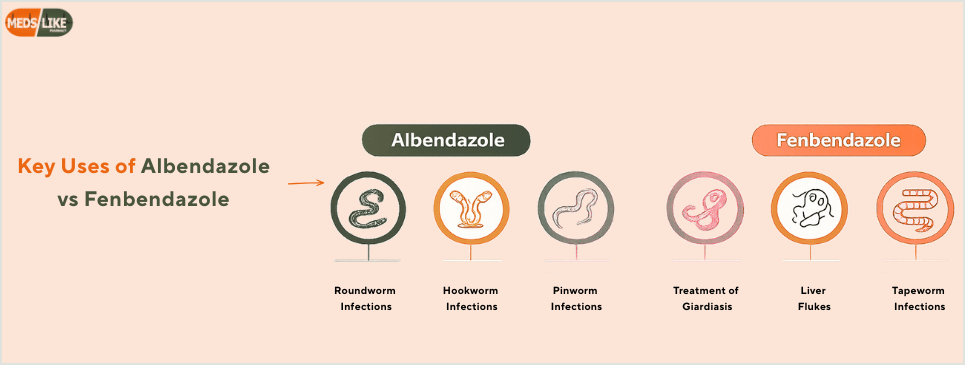
Albendazole Uses
Fenbendazole Uses
Dosage Overview
Albendazole Dosage
Fenbendazole Dosage
Difference Between Albendazole vs Fenbendazole
Feature
Albendazole
Fenbendazole
Drug Type
Human-approved anthelmintic
Veterinary anthelmintic
Approval
FDA-approved for human use
Not approved for human use
Action Area
Systemic (body-wide action)
Primarily acts in the intestinal tract
Effectiveness
Broad-spectrum against multiple parasite types
Mainly effective against intestinal worms
Metabolism
Metabolized in the liver
Limited systemic absorption
Medical Use
Used in hospitals and by prescription
Used primarily in veterinary medicine
Side Effects
Albendazole Side Effects
Fenbendazole Side Effects
Safety and Effectiveness
Why Are Albendazole and Fenbendazole Compared?
Which One is Better?
Conclusion
FAQs
References:


