 +1 305 709 4119 (Click to chat)


Can You Eat Eggs While Taking Levofloxacin? What to Know

Levofloxacin is a prescription antibiotic used to treat certain bacterial infections, including some respiratory tract, urinary tract, and skin infections. Although it can be effective against susceptible bacteria, taking it correctly is important for achieving the best results. Many people ask, can you eat eggs while taking levofloxacin? The good news is that eggs are generally safe to eat while taking this antibiotic. There is no standard requirement to avoid eggs or separate them from levofloxacin tablets. However, some medicines, mineral supplements, and antacids can interfere with levofloxacin absorption. Understanding these interactions can help you take the medication safely and follow your prescribed treatment plan. Levofloxacin blocks bacterial enzymes to stop bacteria from multiplying. Bacteria need these enzymes to copy their DNA, grow, and multiply. Can levofloxacin 500 mg be taken twice a day depends on your prescribed dosage. Signs that Flagyl is working include reduced symptoms and gradual improvement. By interfering with these processes, levofloxacin helps stop susceptible bacteria from multiplying and allows the body to fight the infection. Doctors may prescribe levofloxacin for certain bacterial infections when appropriate. However, it does not treat viral illnesses, such as the common cold or flu. To work effectively, follow your healthcare professional’s instructions on dosage, timing, and treatment duration. Yes, you can generally eat eggs while taking levofloxacin tablets. Eggs contain protein, fats, vitamins, and minerals, but they are not known to cause a clinically significant interaction with levofloxacin. Levofloxacin 500 mg how many times a day depends on the type and severity of infection. Unlike certain mineral supplements and antacids, eggs are not listed in standard prescribing information as products that must be separated from oral levofloxacin. You do not generally need to wait two hours between eating eggs and taking the tablets. Levofloxacin can be taken with or without food. Therefore, you can usually include boiled eggs, scrambled eggs, omelets, or other egg dishes in your regular meals while following your prescribed treatment. Keep these points in mind: If you are taking the oral liquid formulation rather than tablets, check its specific instructions because administration requirements can differ. When to take levofloxacin 500 mg tablet depends on your doctor’s instructions. Eggs have no known significant interaction with levofloxacin tablets. The concern about food and levofloxacin mainly involves certain substances that can reduce how much of the medicine your body absorbs. These include magnesium- or aluminum-containing antacids, iron supplements, zinc-containing multivitamins, and some other products. Eggs contain several nutrients, including small amounts of minerals. However, eating eggs as part of a normal diet is not equivalent to taking concentrated mineral supplements. It is also important to distinguish between eggs and foods or products that contain added minerals. For example, a nutritional supplement taken alongside breakfast may contain iron, zinc, or magnesium that could interfere with levofloxacin absorption. For this reason, check the labels of your supplements and ask a pharmacist if you are unsure whether a product can be taken with your antibiotic. Iron, zinc, and other mineral-containing products may interfere with the absorption of oral levofloxacin. Examples include iron tablets, zinc supplements, and multivitamins containing minerals. Check supplement ingredients for potential interactions with levofloxacin. Some antacids used to relieve heartburn and indigestion contain magnesium or aluminum. These ingredients can interfere with levofloxacin absorption when taken too close together. Read the product label and ask a pharmacist if you are uncertain about its ingredients. Sucralfate is a medicine used for certain gastrointestinal conditions. It can interfere with levofloxacin absorption, so the two medicines need to be taken at appropriately separated times. Milk, cheese, yogurt, and other calcium-rich foods are not all subject to the same restrictions as mineral supplements. For levofloxacin tablets, food and dairy products do not generally need to be avoided. However, certain other fluoroquinolone antibiotics have different instructions regarding dairy and calcium. Follow the instructions for your specific formulation rather than assuming that all antibiotics have identical food restrictions. Prescribing information recommends taking oral levofloxacin at least two hours before or two hours after antacids containing magnesium or aluminum, sucralfate, iron products, and multivitamins containing zinc. This separation is important for products that can interfere with absorption. It is not generally required for ordinary eggs. Following a few simple precautions can help you use levofloxacin correctly. Seek urgent medical advice if you experience symptoms of a severe allergic reaction, such as difficulty breathing or swelling of the face or throat. How long does a 7 day amoxicillin stay in your system depends on kidney function and other factors. So, can you eat eggs while taking levofloxacin? Yes, eggs are generally safe to eat while taking levofloxacin tablets, and you do not usually need to separate them from your medication by two hours. The more important precaution is to avoid taking certain antacids, mineral supplements, and other interacting products too close to your dose. These products may reduce the amount of antibiotic your body absorbs. Take levofloxacin according to your prescription, check with your pharmacist about potential interactions, and seek medical advice if you experience concerning side effects. Q: Do eggs reduce the effectiveness of levofloxacin? No established interaction shows that ordinary egg consumption reduces the effectiveness of levofloxacin tablets. Q: Can I drink milk or eat cheese while taking levofloxacin? Dairy products generally do not need to be avoided with levofloxacin tablets. Q: Can I take levofloxacin with coffee or tea? Coffee and tea are not generally prohibited with levofloxacin tablets. However, caffeine may cause side effects such as restlessness or a racing heartbeat in some people. Q: What if I accidentally eat dairy with levofloxacin? If you take levofloxacin tablets, eating dairy is not generally a reason for concern. If you are unsure about your formulation or other medicines, contact your pharmacist. Q: Do I need to wait two hours after eating eggs? No. A two-hour separation is generally recommended for certain interacting medicines and mineral products, not ordinary eggs.
How Does Levofloxacin Work?
Can You Eat Eggs While Taking Levofloxacin?
Does Levofloxacin Interact With Eggs?
Foods and Supplements to Watch While Taking Levofloxacin
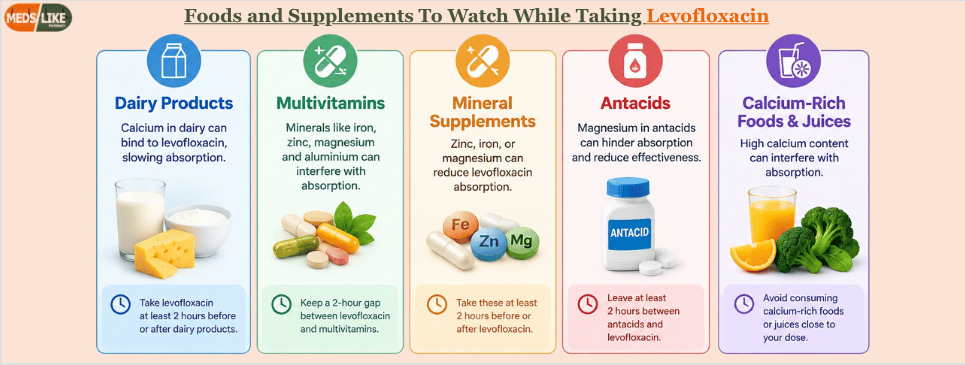 Although you can generally eat eggs, you should pay attention to certain medicines and supplements while taking levofloxacin. Ciprofloxacin vs cephalexin differs in antibiotic class, coverage, and uses.
1. Mineral supplements
2. Antacids containing magnesium or aluminum
3. Sucralfate
4. Dairy products and calcium-rich foods
How far apart should you take levofloxacin and mineral products?
Best Practices for Taking Levofloxacin Safely
Conclusion
FAQs
References:


