 +1 305 709 4119 (Click to chat)


Panacur vs Ivermectin: Mechanisms, Uses & Evidence

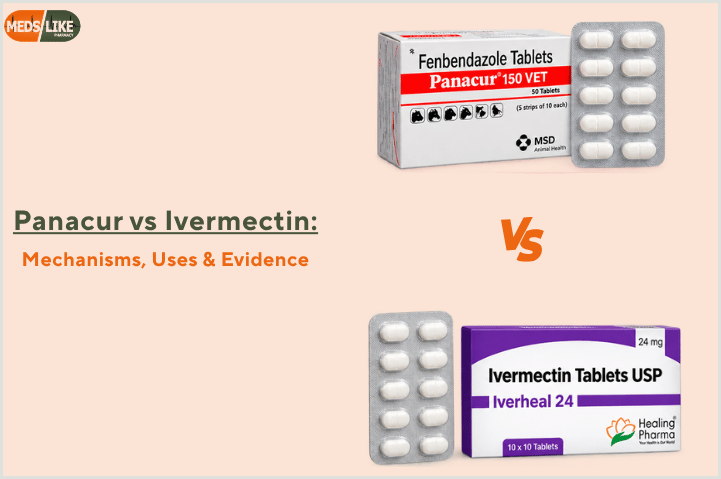
Parasite control is an essential part of responsible animal care. Whether you own pets, manage livestock, or operate a farm, controlling parasitic infections can help support an animal’s overall health and well-being. Two commonly discussed antiparasitic medicines are Panacur vs Ivermectin. Although both medicines control parasites, they contain different active ingredients and target different types of parasites. Their suitability also depends on the animal species, age, weight, health status, parasite involved, and local resistance patterns. In this guide, we compare Panacur and ivermectin, explain how they work, discuss their common uses, and highlight important differences to help animal owners understand these medications better. Ivermectin is an antiparasitic medicine used in specific formulations for humans and animals. In veterinary medicine, it can treat certain internal and external parasites, depending on the animal species and approved product. Does ivermectin expire? Yes, check the product’s expiration date. Ivermectin affects the nervous system of susceptible parasites, eventually causing paralysis and death. Veterinary formulations may be used for conditions involving certain worms, mites, lice, and other parasites. Ivermectin is also commonly associated with heartworm prevention in dogs. However, heartworm prevention and treatment are different, and ivermectin-containing products should only be used according to veterinary instructions. Panacur is a brand name associated with fenbendazole, a benzimidazole anthelmintic. It is commonly used in veterinary medicine to control certain gastrointestinal parasites in animals. Fenbendazole interferes with important cellular processes in susceptible parasites, particularly their ability to absorb and use nutrients. This gradually weakens the parasites and helps eliminate them from the animal. Panacur products are available in different formulations and strengths. The correct product and dose depend on the animal species, body weight, diagnosis, and veterinary instructions. Which is better? When comparing ivermectin vs Panacur, there is no single option that is best for every animal. The appropriate medicine depends primarily on the parasite being targeted and the animal receiving treatment. Both medicines can play an important role in parasite control, but their applications are not identical. Common use: Control of certain gastrointestinal parasites. Potential benefits include: Common use: Control or prevention of certain internal and external parasites, depending on the veterinary formulation. Potential benefits include: The exact parasite coverage varies by product and animal species, so product labeling and veterinary guidance are important. Mechanisms of Panacur Panacur contains fenbendazole, which disrupts parasite cell function and nutrient absorption. It commonly targets intestinal worms, including roundworms and hookworms. Mechanisms of Ivermectin Ivermectin disrupts nerve and muscle signals in susceptible parasites, causing paralysis and death. It may target certain worms, mites, and lice, and is also used in approved products for heartworm prevention in dogs. The main difference between Panacur vs Ivermectin is their active ingredients and mechanisms of action. Panacur: Panacur contains fenbendazole. It interferes with structures and processes that parasites need to survive, including nutrient utilization. Susceptible worms gradually become unable to maintain normal cellular function and are eventually eliminated. Ivermectin: Ivermectin affects nerve and muscle signaling in susceptible parasites. This can cause paralysis, preventing the parasite from maintaining normal activity and ultimately leading to its elimination. Both ivermectin and Panacur for dogs have veterinary applications, but they are not suitable for exactly the same situations. Panacur ivermectin can target certain gastrointestinal worms in dogs, including susceptible roundworms and hookworms. Veterinarians may also prescribe fenbendazole for particular parasitic conditions based on the diagnosis. Ivermectin helps prevent heartworm when used at the correct preventive dose. Certain ivermectin formulations may also target other parasites. It is important not to assume that a higher dose will provide better protection. Some dogs can be particularly sensitive to ivermectin, and inappropriate dosing can cause serious toxicity. Parasite management is particularly important for livestock because heavy infestations can affect growth, nutrition, productivity, and overall health. Why use Panacur for livestock? Fenbendazole can target certain gastrointestinal worms in livestock when the parasites are susceptible. It can form part of a structured deworming program recommended by a veterinarian. Why use ivermectin for livestock? Ivermectin may provide control of certain internal and external parasites in susceptible livestock. Depending on the approved product, it can be used against specific worms, mites, or lice. However, parasite resistance is an increasing concern in livestock production. Repeatedly using the same dewormer without proper diagnosis may reduce its effectiveness over time. Choosing between Panacur and ivermectin should not be based solely on which medicine appears stronger. A veterinarian may consider: Accurate diagnosis is particularly important when an animal continues to show signs of parasitic infection after treatment. In some veterinary situations, veterinarians may use different antiparasitic medicines as part of a specific treatment plan. However, owners should not combine Panacur and ivermectin on their own. Fenbendazole for cats dosage chart by weight helps guide appropriate dosing. Using multiple antiparasitic medicines without professional guidance can increase the risk of adverse effects and may not provide additional benefit. Always follow the veterinarian’s instructions and the product label. Evidence for both medicines supports their veterinary use against specific susceptible parasites. However, effectiveness is not determined only by the medicine itself. Factors such as the parasite species, animal type, dosage, treatment duration, and parasite resistance can influence the outcome. For livestock, resistance to commonly used dewormers is an important consideration. Repeated or unnecessary use of the same medication may reduce its effectiveness against certain parasite populations. Therefore, Panacur vs Ivermectin should not be viewed as a simple choice between a “stronger” and “weaker” medicine. The most appropriate option depends on the diagnosed parasite, animal species, health status, and veterinary recommendations. Understanding Panacur vs Ivermectin can help pet owners and livestock managers make more informed decisions about parasite control. Panacur contains fenbendazole and commonly targets certain gastrointestinal parasites. Ivermectin targets several susceptible internal and external parasites and appears in specific veterinary products for heartworm prevention.
What Is Ivermectin?
What Is Panacur?
Panacur vs Ivermectin: Uses and Benefits
Panacur
Ivermectin
Panacur vs Ivermectin: Mechanisms and Evidence
How Do Panacur and Ivermectin Work?
Ivermectin vs Panacur: Key Differences
Feature
Ivermectin
Panacur
Active ingredient
Ivermectin
Fenbendazole
Drug class
Macrocyclic lactone
Benzimidazole
Main target
Certain internal and external parasites
Mainly susceptible gastrointestinal parasites
Mechanism
Disrupts parasite nerve and muscle function
Interferes with parasite cellular function and nutrient use
Common veterinary use
Certain worms, mites, lice, and heartworm prevention products
Certain intestinal worms
Formulations
Vary by animal and product
Vary by animal and product
Best choice
Depends on parasite and animal
Depends on parasite and animal
Veterinary guidance
Recommended
Recommended
Which Is Better for Dogs?
Panacur vs Ivermectin for Livestock
How to Choose the Right Dewormer?
Can Panacur and Ivermectin Be Used Together?
What Does the Evidence Suggest?
Conclusion
References:


