 +1 305 709 4119 (Click to chat)


What Is Ivermectin And What Is It Used For? A Complete Guide

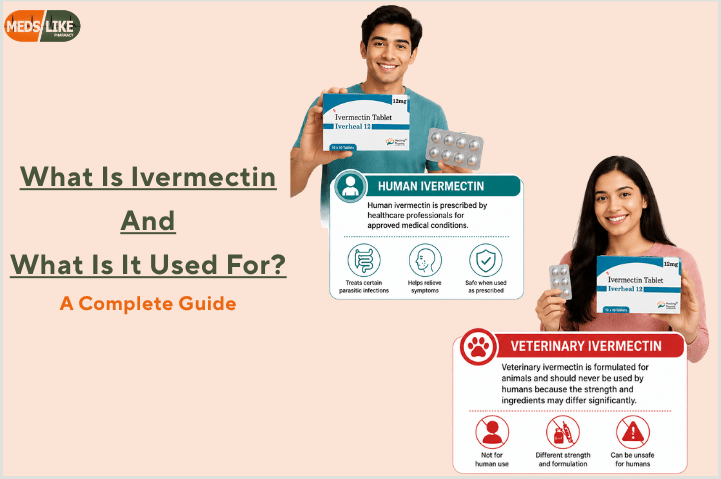
Ivermectin has treated parasitic infections for decades. It is also widely used in veterinary medicine, but the formulations made for animals should never be used by people. It has received significant public attention in recent years; many people have questions about what it is, how it works, and when it is appropriate to use. This guide explains what ivermectin is, its approved medical uses, how it works, potential side effects, and important safety information. Ivermectin is an antiparasitic medicine from the anthelmintic drug class. It safely treats parasite infections when used as prescribed. Ivermectin dosage for humans for parasites may require a single dose or multiple doses depending on the specific parasite. There are two main types of medicine: Since it is a prescription medication in many countries, it should only be taken under the guidance of a qualified healthcare provider. Ivermectin targets the nervous system of certain parasites. It binds to specific channels in the parasite’s nerve and muscle cells, causing paralysis and eventually killing the parasite. Uses for ivermectin include treating parasitic infections in humans under medical guidance. Because these channels are different from those found in humans, it can effectively eliminate susceptible parasites while remaining safe for most people when taken at the prescribed dose. It is important to remember that ivermectin does not treat every type of infection. Its effectiveness depends on the specific parasite causing the illness. Strongyloidiasis is caused by Strongyloides stercoralis infection. Untreated infections can last for years and may become serious. It is considered one of the preferred treatments for this condition. Onchocerciasis is caused by the parasite Onchocerca volvulus, which is transmitted through blackfly bites in certain regions. It reduces parasites and helps prevent complications. Scabies is caused by tiny skin mites. Although topical medications are often the first treatment, oral ivermectin may be recommended in certain situations, such as widespread outbreaks or when topical treatments are unsuitable. It may also be prescribed for difficult-to-treat head lice infestations. In some cases, healthcare providers recommend either oral medicine or a prescription topical formulation when standard treatments have not been effective. Depending on the patient’s condition and medical history, doctors may prescribe medicine for other parasitic diseases where clinical evidence supports its use. Take ivermectin exactly as your doctor prescribes. Doctors prescribe medicines to treat parasitic infections in humans. General recommendations include: Doctors choose the dose based on your weight, age, infection, and overall health. Uses for ivermectin tablets include treating doctor-diagnosed parasitic infections in humans. Ivermectin may cause side effects like other medicines. What is ivermectin good for depends on the condition, but it is mainly effective against parasitic infections. Many people tolerate the medicine well, but some may experience mild or temporary reactions. Common side effects include: Side effects are usually mild and temporary. Serious side effects are rare but need urgent medical care. Get immediate medical help if severe symptoms occur. Contact your healthcare provider promptly if you notice any unusual or worsening symptoms after taking medicine. Ivermectin may not be suitable for everyone. Tell your doctor if you have liver disease before taking medicine. It treats intestinal worms, river blindness, and some scabies cases. Consult your doctor if pregnant or planning pregnancy. Breastfeeding mothers should consult a healthcare professional before taking medicine to understand whether the medication is appropriate during nursing. Individuals with a weakened immune system may require additional medical evaluation and monitoring before using the medicine. Do not take medicine if you have a known allergy to the medication or any of its components. Get immediate medical help if you notice any signs of an allergic reaction. Always tell your healthcare provider about all medications, vitamins, and herbal supplements you are taking, as some products may interact with medicine and affect its safety or effectiveness. Certain medications may interact with ivermectin and increase the risk of side effects. What is ivermectin fenbendazole used for refers to two different antiparasitic medicines with different uses. Examples include: Inform your doctor about all medicines and supplements. Ivermectin is a well-established antiparasitic medication that has played an important role in treating several parasitic infections for many years. It effectively treats strongyloidiasis, onchocerciasis, scabies, and some lice cases. Q: Is ivermectin an antibiotic? No. It is an antiparasitic medication. It does not treat bacterial infections. Q: Can I buy ivermectin without a prescription? Prescription requirements vary by country. In many regions, you need a valid prescription to get medicine. Q: Can children take ivermectin? Doctors may prescribe medicine for children when needed. Doctors choose the dose based on body weight and the condition. Q: Can I take ivermectin without consulting a doctor? No. Self-medicating can lead to incorrect dosing, unnecessary side effects, or delayed treatment of the actual condition.
What Is Ivermectin?
How Does Ivermectin Work?
Uses of Ivermectin
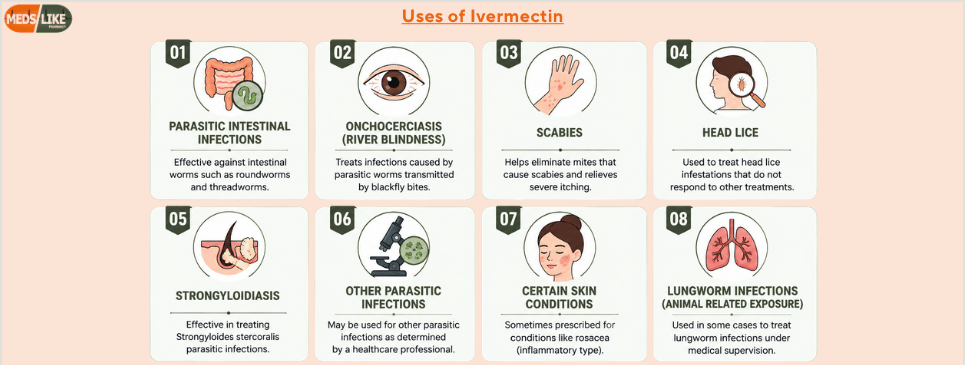 Healthcare professionals prescribe ivermectin for several parasitic infections. Use of ivermectin includes treating parasitic infections.
Strongyloidiasis
Onchocerciasis (River Blindness)
Scabies
Head Lice
Other Parasitic Infections
How Should Ivermectin Be Taken?
Possible Side Effects of Ivermectin
Serious Side Effects
Who Should Avoid Ivermectin?
What can ivermectin interact with?
Final Thoughts
FAQ
References:


