 +1 305 709 4119 (Click to chat)


How Long Does Fenbendazole Take to Work? What to Expect

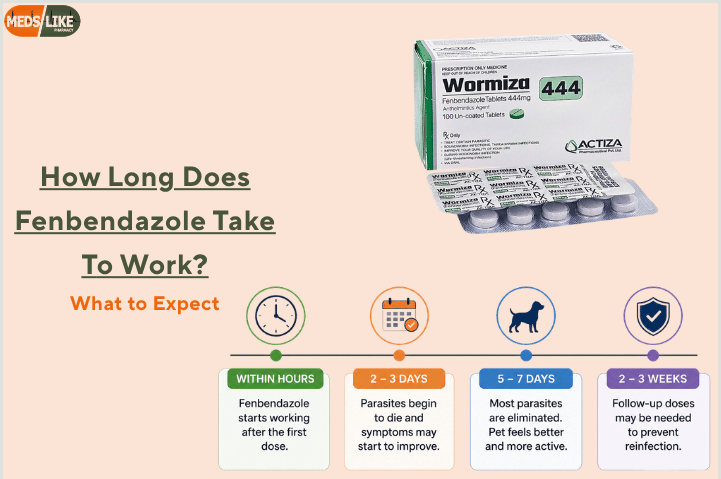
If your veterinarian has prescribed fenbendazole for your pet, you may be wondering how quickly it starts working. Whether your dog or cat is being treated for roundworms, hookworms, whipworms, or certain tapeworms, knowing what to expect can help you monitor your pet’s recovery. The good news is that fenbendazole begins working soon after it is administered. However, visible improvements may take several days, depending on the type of parasite, the severity of the infection, and your pet’s overall health. Many pet owners ask how long fenbendazole takes to work before they begin treatment, as the timeline can vary depending on the type of parasite and the severity of the infection. Many pet owners use a fenbendazole dosage calculator to estimate the correct dose based on their animal’s weight, but the final dosage should always follow a veterinarian’s recommendations. In this guide, we’ll explain how long fenbendazole takes to work, what affects its effectiveness, and when you should expect to see results. Fenbendazole is a broad-spectrum deworming medication commonly prescribed by veterinarians to eliminate intestinal parasites in dogs, cats, horses, cattle, and other animals. It belongs to the benzimidazole class of antiparasitic drugs. Fenbendazole blocks parasites from absorbing nutrients. The dead worms are naturally passed through the digestive system. Fenbendazole is commonly prescribed to treat a wide range of intestinal parasites in animals. It is highly effective against roundworms, hookworms, and whipworms, making it one of the most trusted deworming medications for pets. It can also eliminate certain species of tapeworms and is effective against some lungworms, depending on the parasite species and your veterinarian’s treatment recommendations. Because of its broad-spectrum activity, fenbendazole is frequently chosen to control multiple types of parasitic infections with a single treatment course. Fenbendazole starts working within a few hours after the first dose. The medication begins interfering with the parasites’ metabolism almost immediately after it reaches the digestive tract. Although the drug starts working quickly, this does not mean the parasites disappear instantly. Most worms require time to weaken, die, and leave the body naturally. In many cases, pet owners notice improvements within 2 to 5 days after treatment begins. For heavy infestations, complete parasite elimination may take longer, especially if multiple treatment cycles are necessary. Some people also search for how long does fenbendazole take to work in humans, although fenbendazole is primarily approved for veterinary use and should only be used in humans under appropriate medical guidance where applicable. The timeline varies depending on the parasite being treated and the severity of the infection. Within the First 24 Hours After 2 to 3 Days Within 5 to 7 Days After Several Weeks Some parasites produce eggs that survive the initial treatment. A second treatment may be needed after 2–3 weeks to prevent reinfection. If you’re wondering how long does it take fenbendazole to work, the medication generally begins affecting susceptible parasites within hours after the first dose. Several factors influence how fast fenbendazole produces results. Type of Parasite Different parasites respond differently to treatment. Roundworms often clear more quickly than whipworms, which may require longer treatment. Severity of the Infection Pets with heavy worm burdens generally take longer to recover because a larger number of parasites must be eliminated. Proper Dosage Fenbendazole must be given according to your veterinarian’s instructions. Underdosing can reduce effectiveness and may not eliminate all parasites. Overall Health Healthy pets often recover more quickly than animals with weakened immune systems, poor nutrition, or underlying medical conditions. Completing the Full Course Even if your pet appears better after a few days, always complete the prescribed treatment. Stopping treatment early can allow parasites to survive. Most pets show gradual improvement rather than immediate results. Common signs include: Some owners notice dead worms in their pet’s feces during treatment. While this can be unpleasant, it is usually a normal sign that the medication is working. A common question is Does fenbendazole expire, and the answer is yes—always check the expiration date on the packaging, as expired medication may lose its effectiveness. Occasionally, pets may experience mild digestive upset during treatment. This can happen because dying parasites irritate the intestines as they are expelled. Possible temporary effects include: These side effects usually disappear within a few days. Veterinarians are often asked how long does it take for fenbendazole to work. While it starts working quickly, noticeable improvements are typically seen within 2 to 7 days as parasites are eliminated from the body. If your pet develops severe vomiting, persistent diarrhea, difficulty breathing, or extreme lethargy, contact your veterinarian immediately. If your pet continues to show symptoms after completing a full course of fenbendazole, there could be several reasons why the treatment hasn’t produced the expected results. Your pet may have been reinfected from a contaminated environment, received an incorrect dosage, or been misdiagnosed with a condition that mimics a parasitic infection. Some parasites may not respond well to the medication. Another health condition could be causing similar symptoms. If symptoms persist, consult your veterinarian. They may recommend a follow-up fecal examination, additional diagnostic tests, or prescribe a different deworming medication based on your pet’s specific condition. To maximize the effectiveness of fenbendazole: Good hygiene helps prevent reinfection and protects other pets in the household. Fenbendazole begins working within hours of administration, but noticeable improvements typically occur over 2 to 7 days. The exact timeline depends on the type of parasite, the severity of the infection, and your pet’s overall health. Fenbendazole veterinary use includes treating a variety of intestinal parasites in dogs, cats, horses, cattle, and other animals, making it one of the most widely used deworming medications in veterinary medicine. Following your veterinarian’s instructions, completing the full treatment course, and maintaining a clean environment will help ensure the best results. If symptoms persist after treatment or your pet appears seriously ill, consult your veterinarian for further evaluation and testing. Q: Does fenbendazole work after one dose? Fenbendazole begins working after the first dose, but most treatment plans require multiple consecutive days to eliminate susceptible parasites. Q: Can I see worms after treatment? Yes. Some pets pass dead or dying worms in their stool during treatment. Others digest the parasites completely, so no visible worms appear. Q: How long does it take for diarrhea to improve? Many pets show improvement within two to five days, although recovery depends on the severity of the infection and the type of parasite. Q: Can parasites come back? Yes. Pets can become reinfected if they are exposed to contaminated soil, feces, or infected animals. Preventive care and proper sanitation are essential.
What Is Fenbendazole?
How Long Does Fenbendazole Take to Start Working?
When Will You See Results?
Factors That Affect How Quickly Fenbendazole Works
Signs That Fenbendazole Is Working
Can Symptoms Get Worse Before They Improve?
What If Fenbendazole Doesn’t Seem to Work?
Tips for the Best Results
Final Thoughts
FAQ
References:


